- Individually designed, validated, and built:
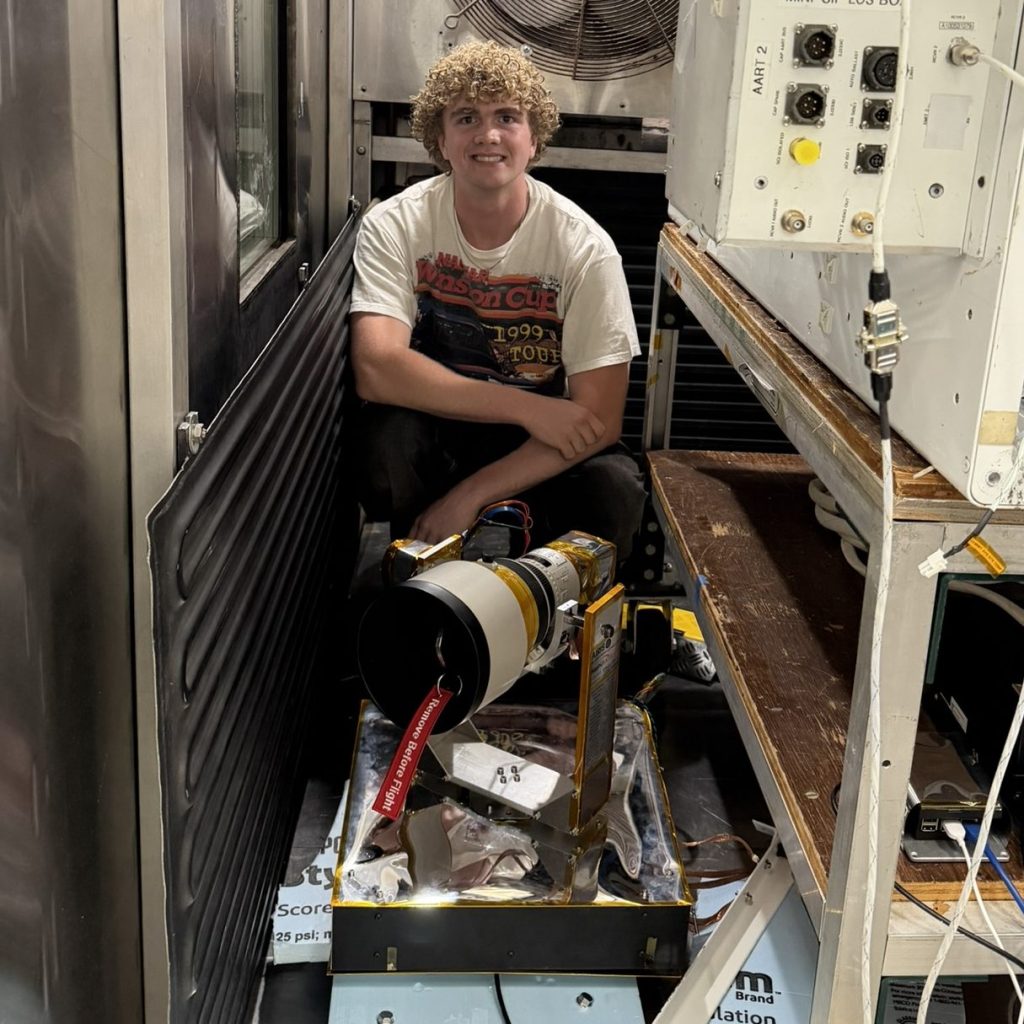
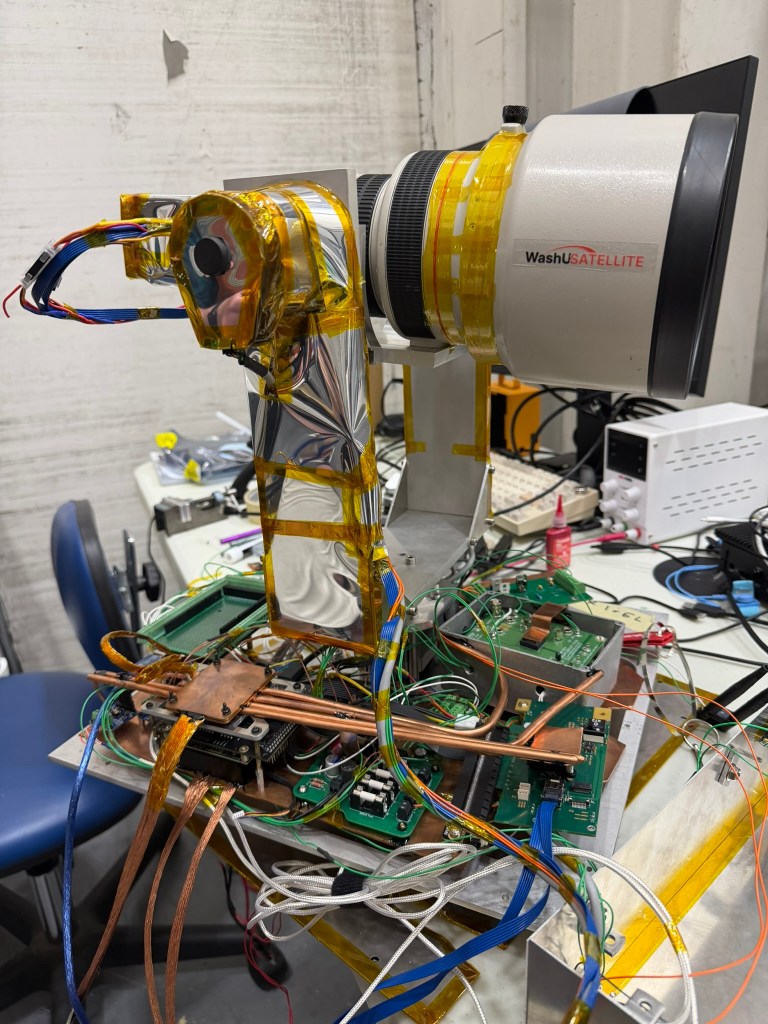
- Electronics enclosure, electronics mounting system, and wire routing
- Heat pipes, mylar MLA paneling, and homemade thermal tether
- Azimuthal motor mount with custom designed PEEK combined-load bearing
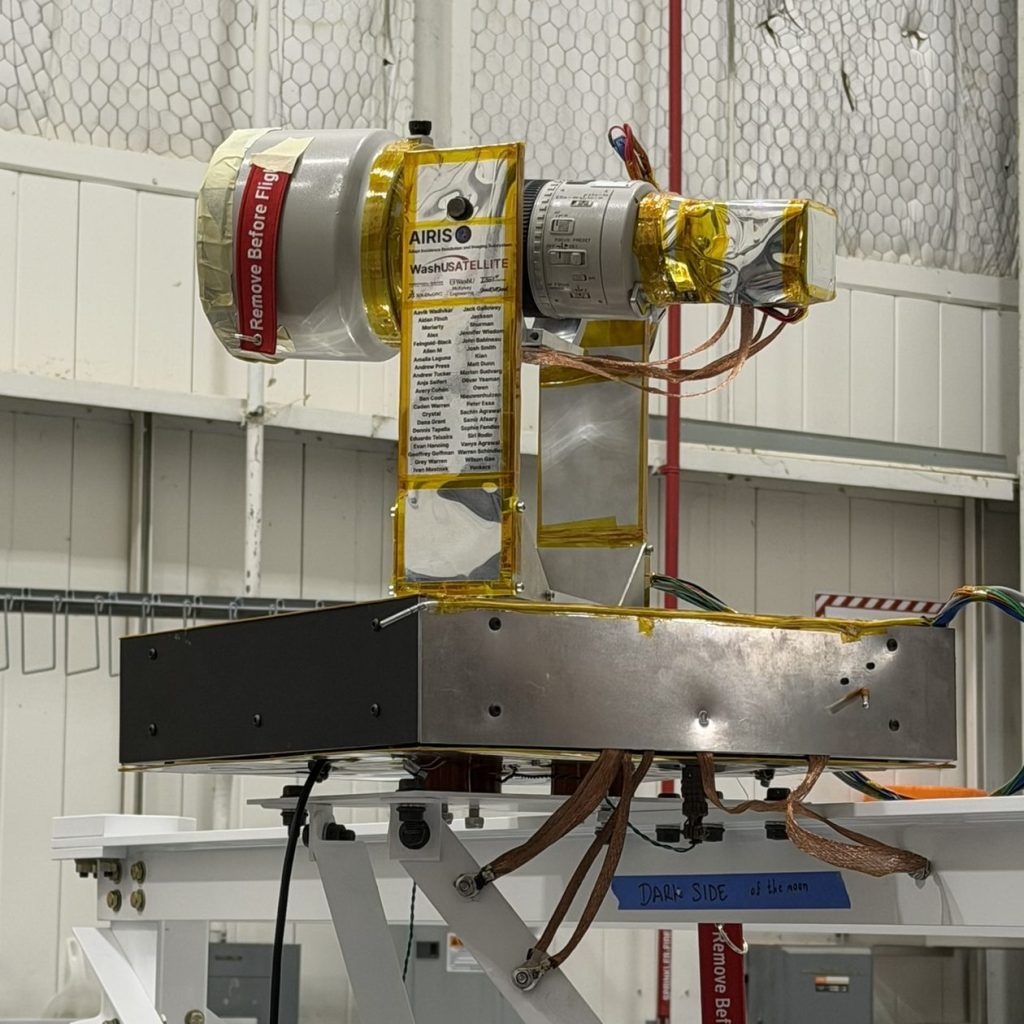
- Structural baseplate
- Passed thermal vacuum testing on the first try, showing full functionality from -40C to 56C in high vacuum
- 4x expected performance, pivoting to any direction in under 5s with <0.5 degree accuracy
- Integrated 100+ part moving SolidWorks assembly with components from 5 other engineers as the Responsible Engineer for the structure
- Built Model-Based Systems Engineering (MBSE) block diagram using MATLAB and System Composer
- Designed for 8G horizontal and 4G lateral loading with two axes of movement
- Performed Finite Element Analysis (FEA) on the full structure
- Wrote NASA-approved structural design document outlining loading, contact conditions, and bolt preload.
- Maintained <1% TML and <0.1% CVCM outgassing as per NASA E595 in 95% vacuum
- Wrote C++ and python controls code enabling self-homing and sun avoidance
- Integrated thermal system built to keep electronics safe below -60°C during ascent and protect from sun-induced overheating at 120,000 feet
- Traveled to the NASA CSBF (Columbia Scientific Balloon Facility) in Palestine, TX to perform integration and TVAC testing support for 2 months
- Estimated to image Gamma Ray Bursts ~100x faster than any previous technology
- Winner of the Outstanding Impact Award from the Washington University Journal of Undergraduate Research
415-250-7507 | o.a.yeaman@wustl.edu | linkedin.com/in/oliveryeaman | Resume
AIRIS: High altitude pivoting telescope for NASA research balloon | WashU Satellite | 2024-2026
SCALAR: 1U CubeSat Satellite | WashU Satellite | 2026
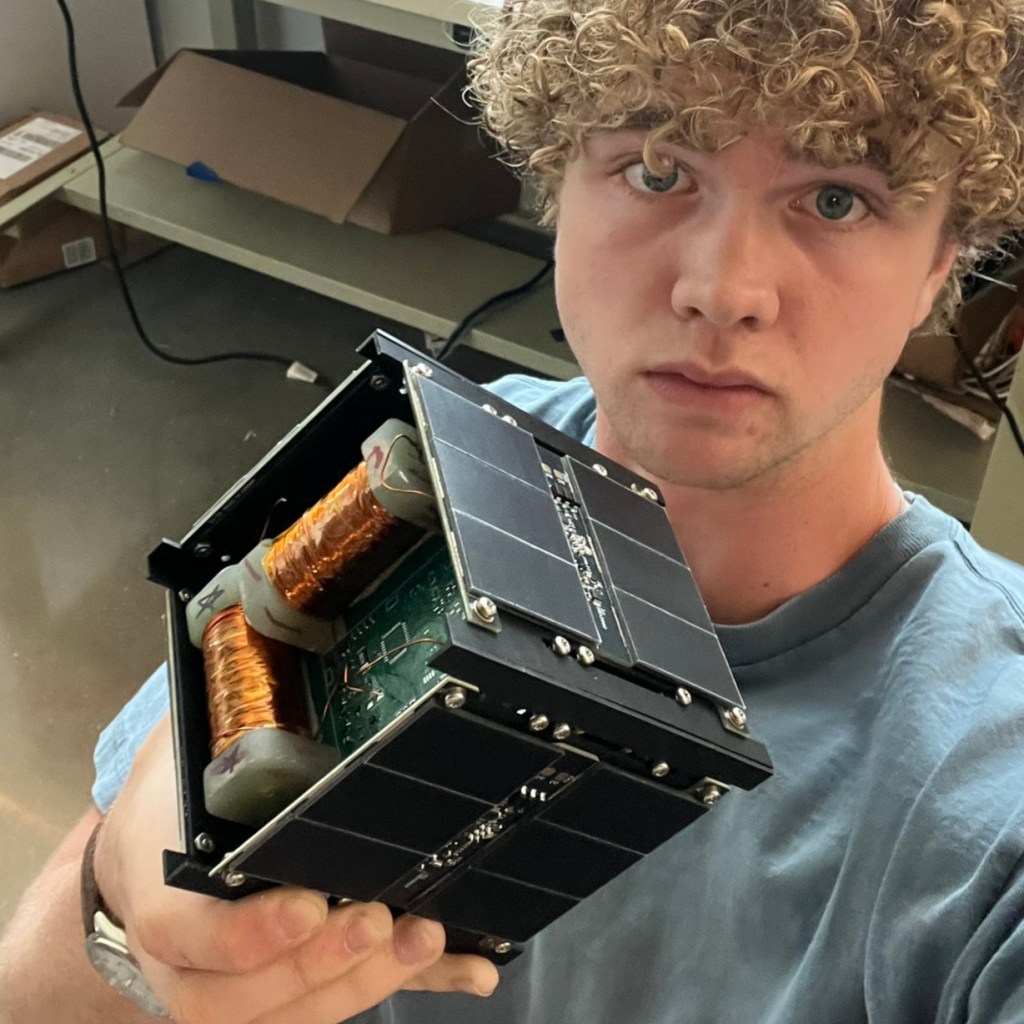

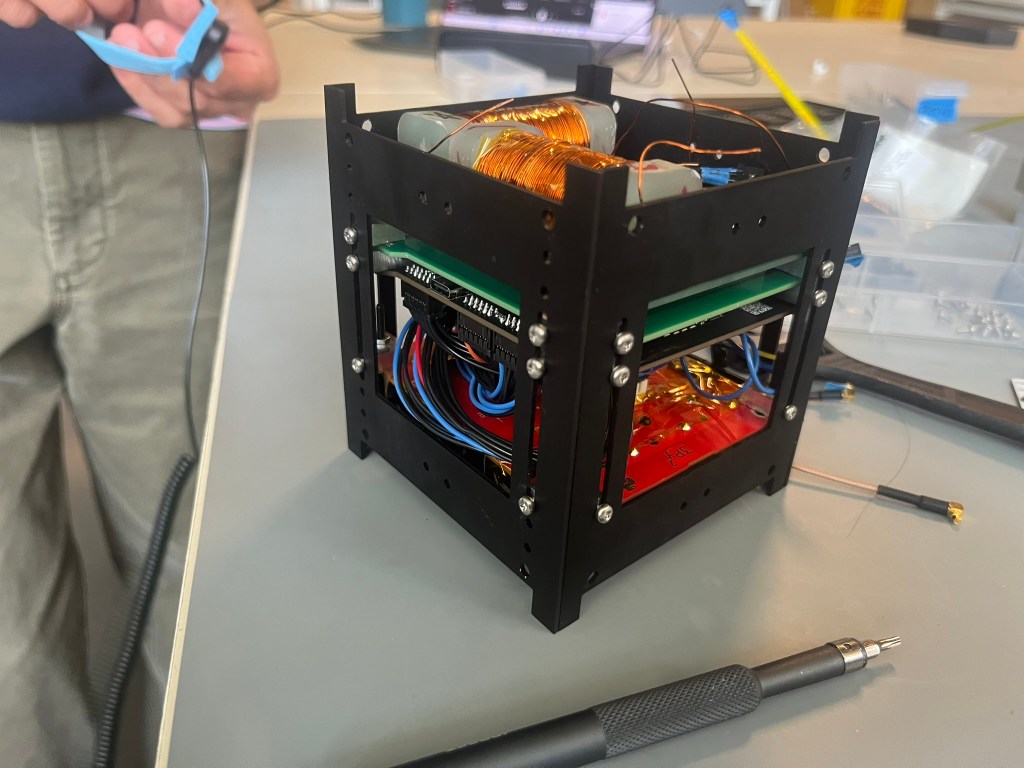
- Served as Chief Mechanical Engineer for development of WashU Satellite’s first satellite, a 10x10x10cm CubeSat designed to provide 3-axis control using an LQR controls algorithm using three club-built magnetorquers
- Oversaw design of fully custom 6061 Aluminum frame built to withstand 30G quasistatic loading consistent with Falcon 9 launch requirements
- Performed mass estimation using SolidWorks and real-life validation to achieve under 5% error for mass, moments and products of inertia, and center of mass.
- Performed vibrational analysis in SolidWorks to determine natural frequency and structural response to launch vibrations
- Machined 12 custom corner brackets and 8 custom L-brackets to maximize space and simplify assembly process
- Created wire management plan to fit six PCBs, four 18650 batteries, and two magnetorquers in a 10cm form factor
- Taught Finite Element Analysis to enable member-performed validation
- Assisted with COMSOL thermal analysis integrated with orbital parameters and heat produced from PCBs and custom magnetorquers
- Traveled to CalPoly to present on SCALAR at the 2026 CubeSat Developer’s Workshop
Thermal Vacuum Chamber (TVAC) | Independent Project (WIP) | 2026

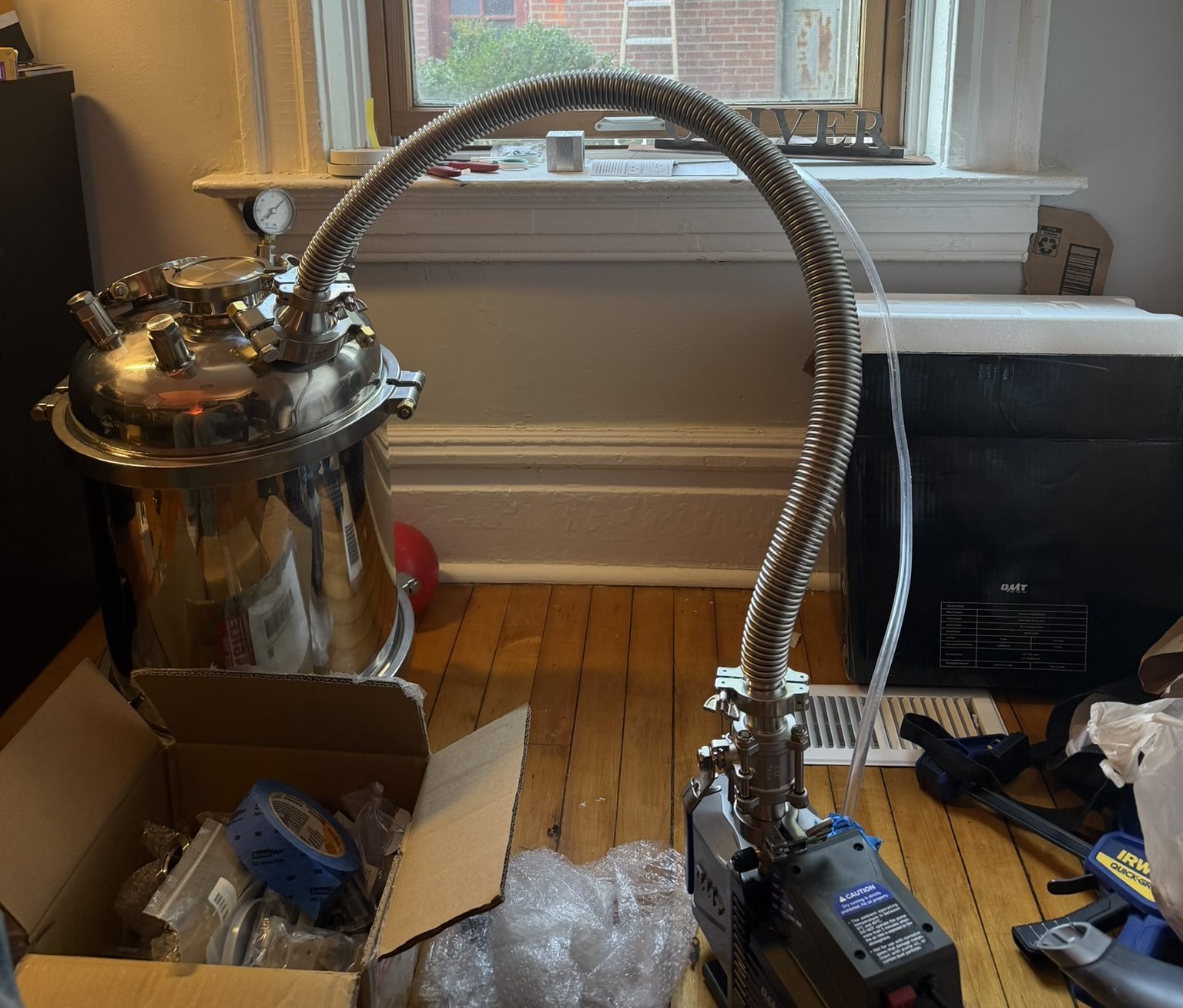
- Designing and building thermal vacuum chamber for CubeSat testing
- Achieved full build 95% cheaper than commercial quotes
- Successfully built and tested custom 40-wire vacuum data passthrough
- Analyzed CTE of multiple components to create a system capable of maintaining vacuum from -20 to 40 degrees C
- Current milestone: reached rough vacuum and tested custom data passthrough
- To-do: integrate temperature capabilities and turbopump
THRUST: Garage-built cold-gas RCS thruster | Independent Project | 2023

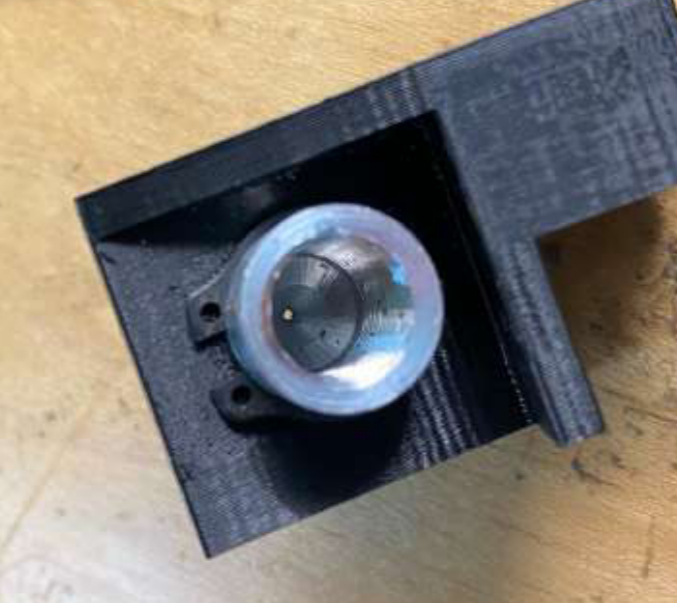
- Designed and built a single-axis reaction control system with two directions of thrust
- Machined custom nozzles on a lathe with <0.025in throat diameter
- Determined optimal nozzle geometry using NASA documentation
- Created Fusion 360 model and machining procedures
- Safely managed and tested 3000psi system, regulated to 400psi at the nozzles for consistent thrust
- Used a combination of manual valves and blowoff systems to ensure safety
- Performed leak testing with soap bubbles
- Wrote C++ control code for Arduino
- Designed and soldered an electrical assembly for the control of two 12V solenoid valves
- Designed and 3D printed custom nozzle mounts
- Demonstrated controlled rotation on a test stand
Enceladus ExoPlume: NASA New Frontiers Mission Proposal | Introduction to Planetary Mission Design | 2025

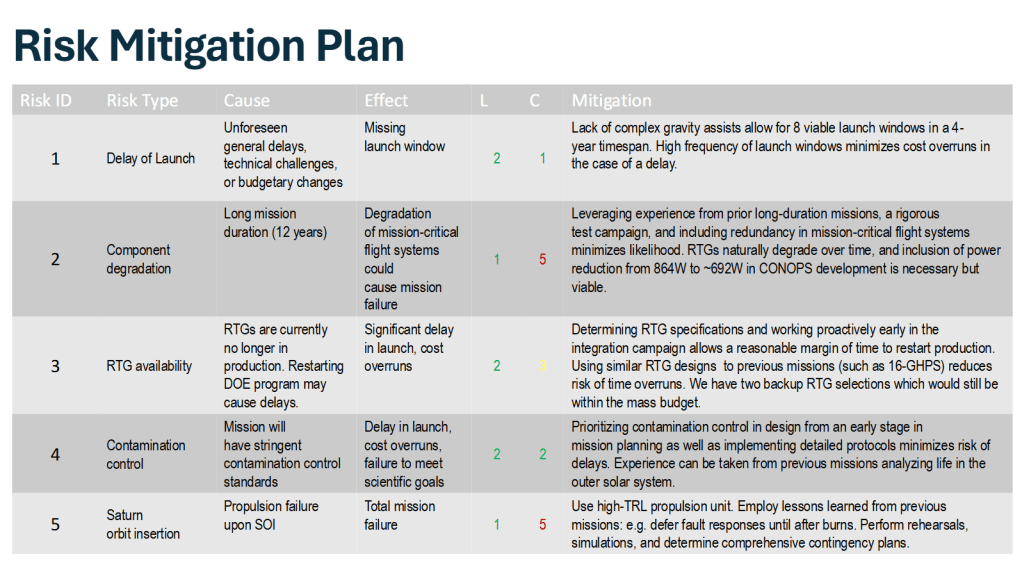

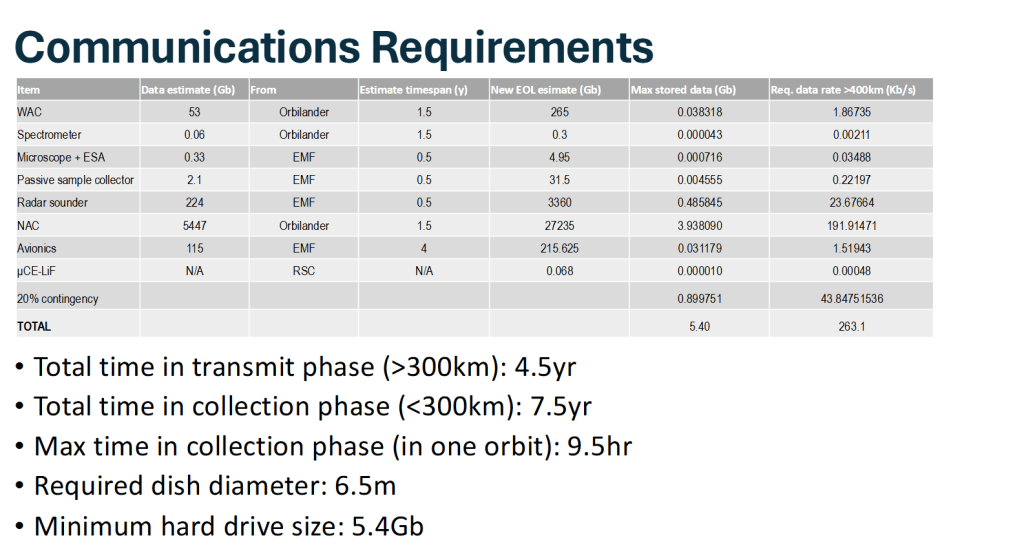
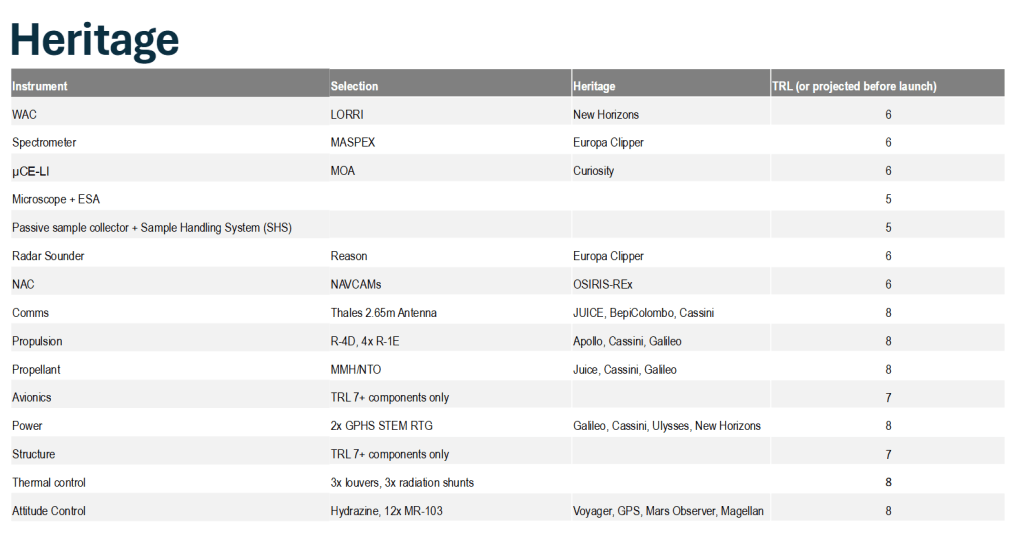
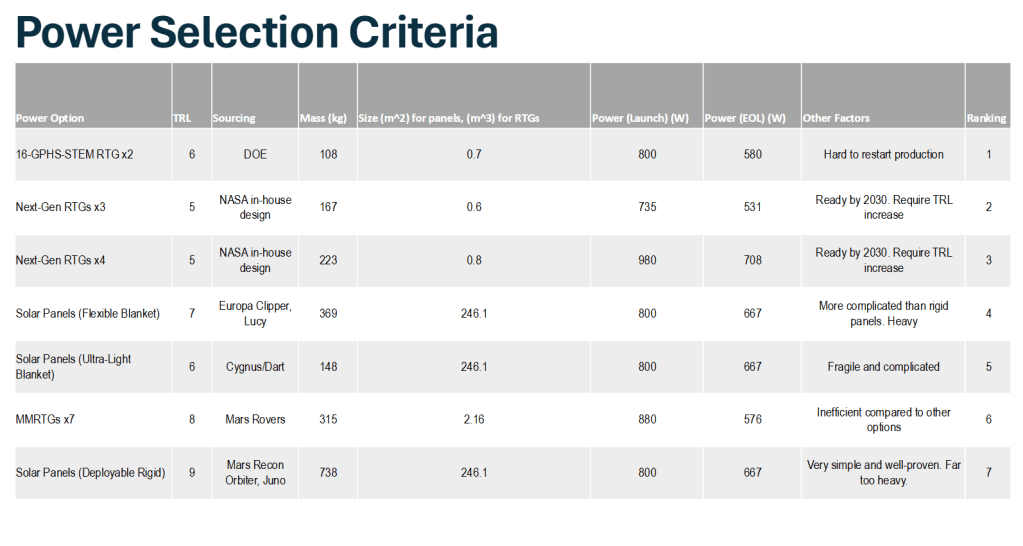
- Chief Mechanical Engineer for a simulated NASA interplanetary mission proposal brought to a CDR level in a class taught by a JPL/NASA employee
- Used spreadsheets to calculate:
- Rate budget for data transmission to earth from Enceladus
- Mass budget with a combination of custom components and mass calculations from past missions and proposals, including all scientific instruments
- Power budget for three RTG options and four solar panel options
- Financial budget
- Created CONOPS profile for mission’s orbit and coast phases
- Built a Risk Matrix and Risk Mitigation Plan for five primary failure modes
- Used rocket equation and orbital calculations to calculate dry mass, wet mass, and delta-V budgets for various propulsion options including monopropellant, bipropellant, nuclear, and electric propulsion.
- Contributed to a full Science Traceability Matrix for project
- Determined Technological Readiness Level (TRL) for all components, and ensured compliance with launch requirements
RACK: Folding modular tow hitch mounting system with bike rack attachment | Independent Project | 2023
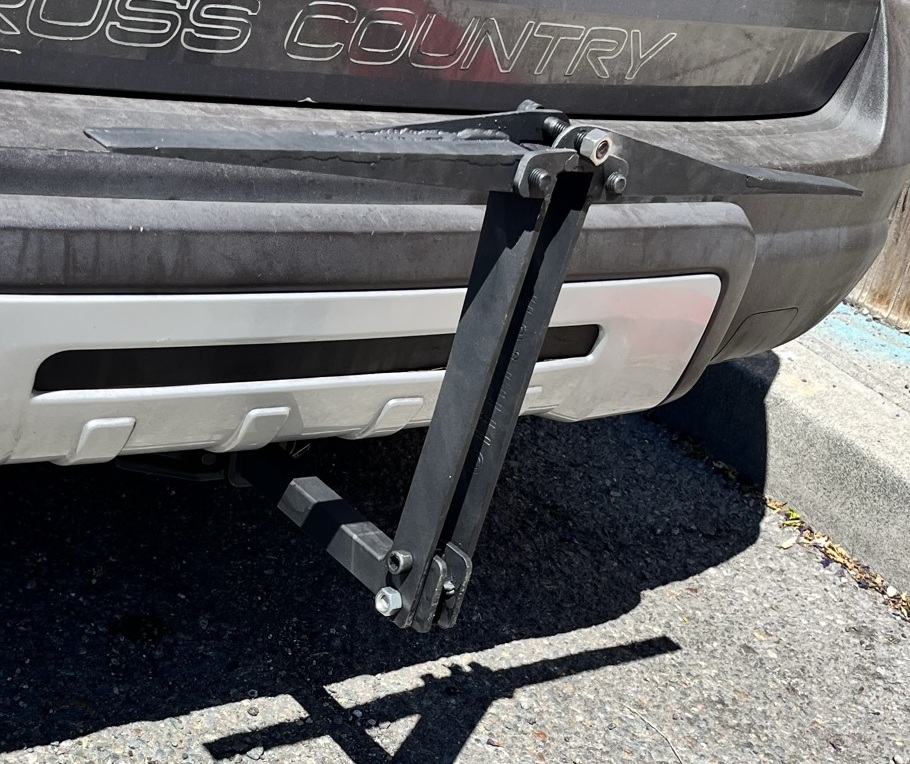
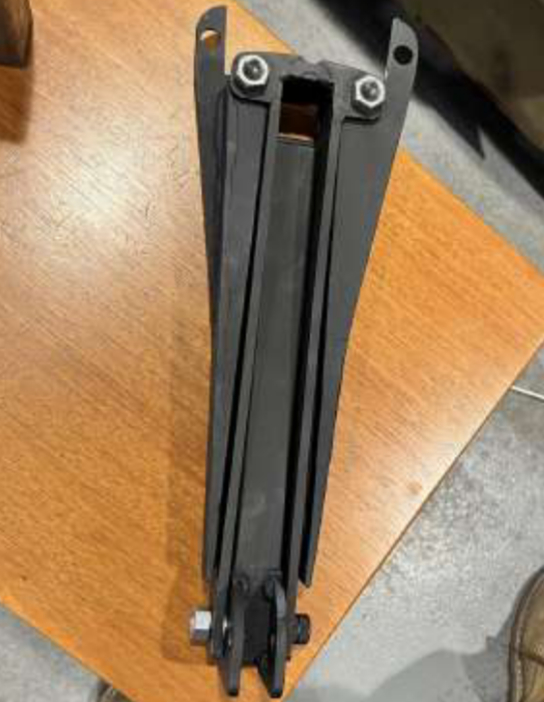
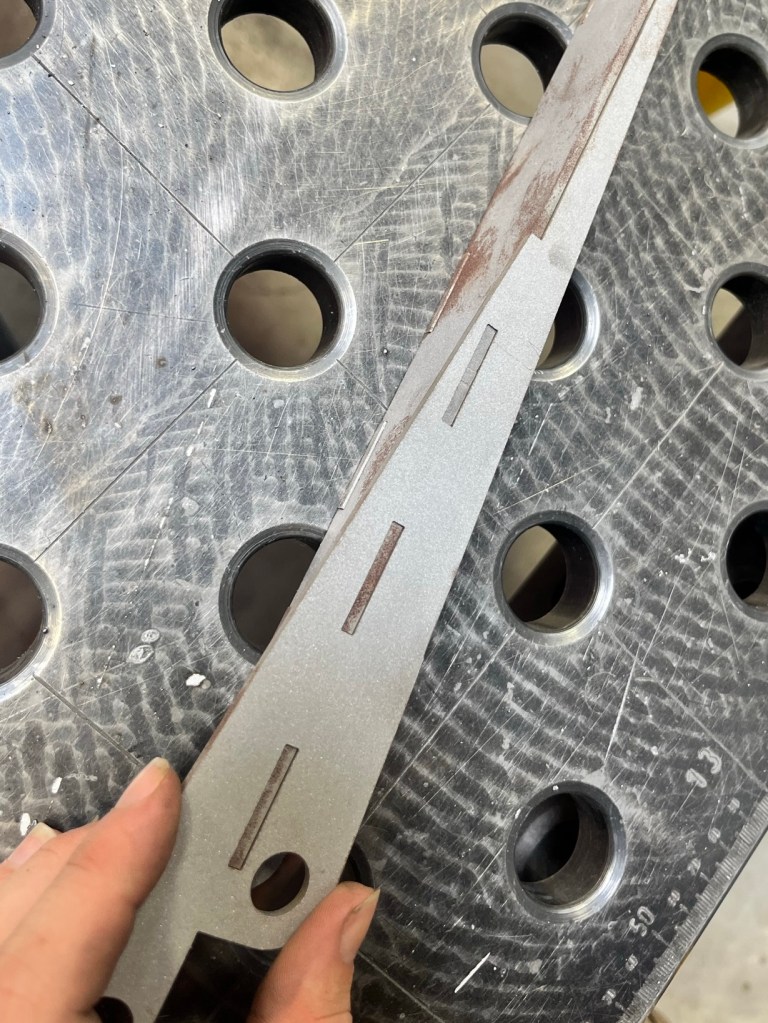
- Designed and built a foldable fow-hitch attachment with modular attachment points
- Takes up 85% less space than anything I could find on the market when folded
- Successfully held a mountain bike while driving on the road
- Modeled a full moving assembly in Fusion 360
- Used GD&T as per ASME Y14 with interference and clearance fits
- Achieved successful tolerancing for welded and painted joints
- Machined all components
- Used water jet and CAM CNC routing
- Used manual mill
- Welded multiple critical joints
RAILING: Railing set for standard shipping container | Flying Moose Industries | 2023
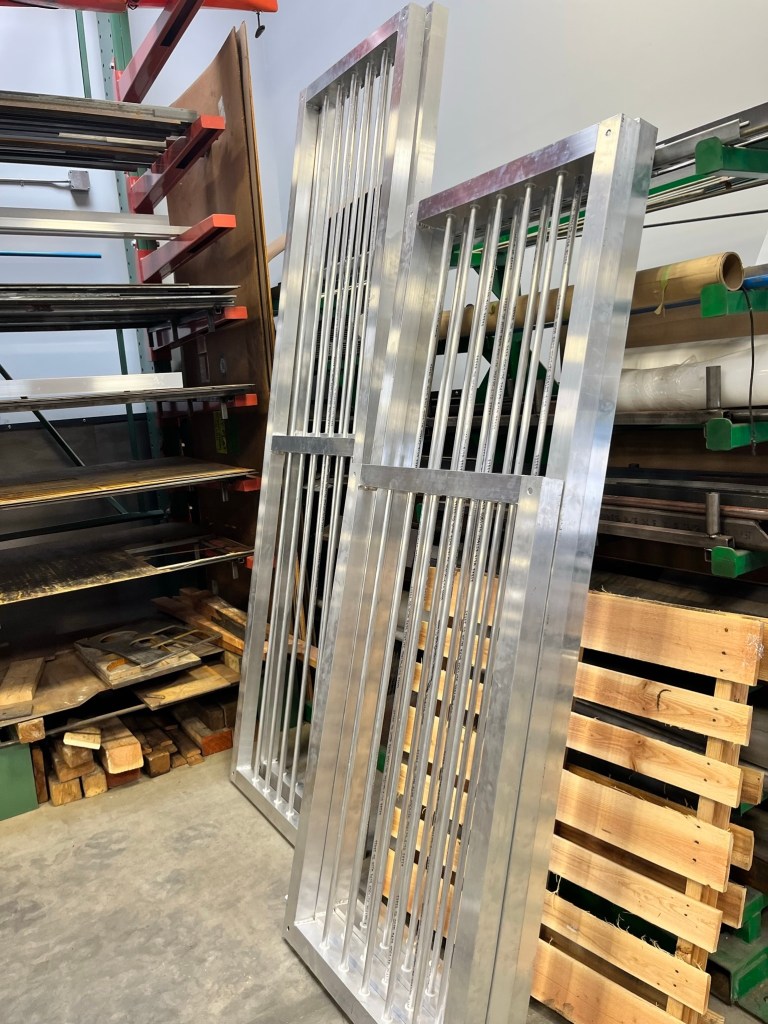
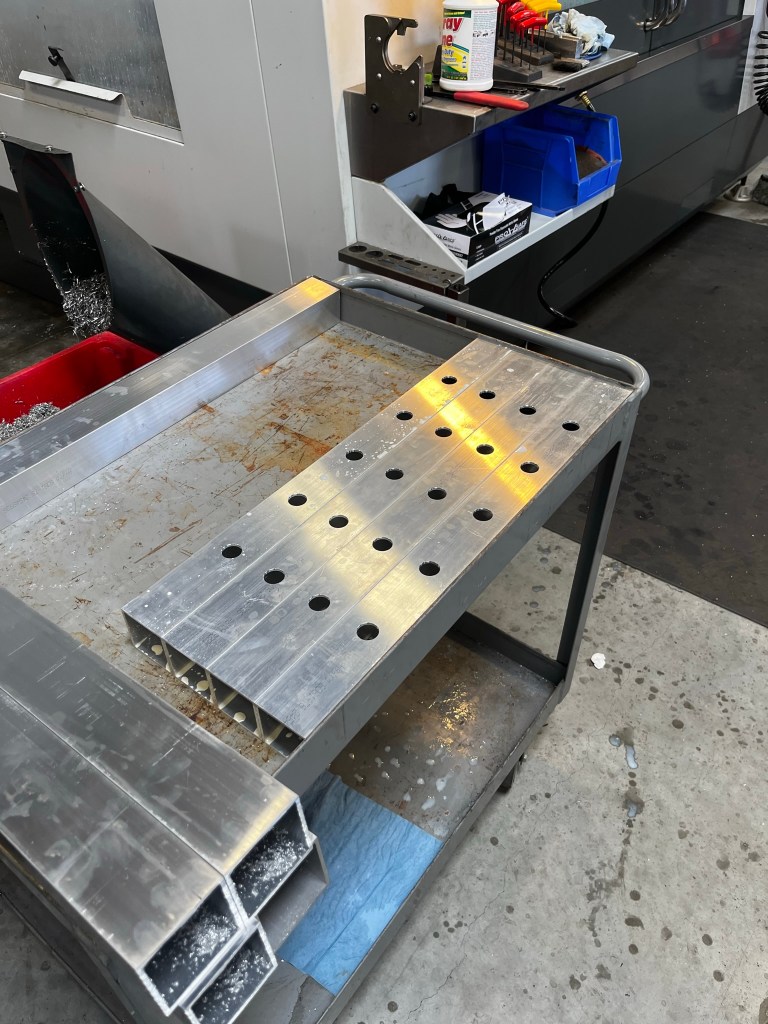

- Programmed repeated, optimized CAM cycles on a CNC Mill to create a set of railings for a standardized shipping container
- Used manual mill for roughing passes
- Created tooling to optimize manufacturing processes
- Welded components together and prepared contact surfaces for welding
- Verified manufacturing with calipers
- Achieved successful assembly of all railing sets
Nozzle Optimizer: MATLAB script that optimizes and visualizes cold-gas thruster nozzle parameters | Independent Project | 2026
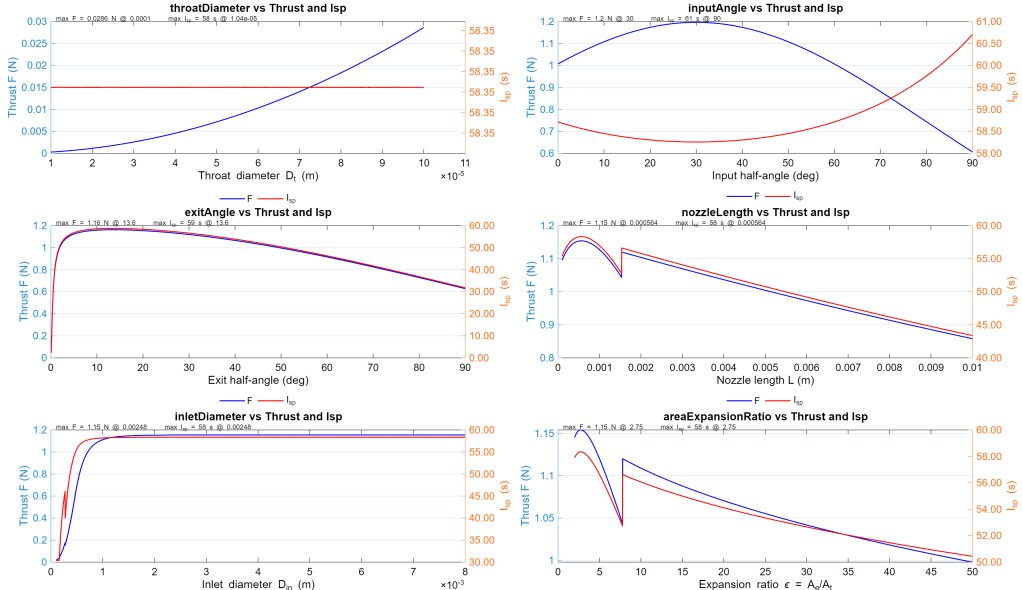
- Programmed a physics‑based fluid‑dynamics optimization tool in MATLAB that calculates optimal thruster input/output angles, exit angles, inlet diameters, expansion ratio, nozzle length, and throat diameter
- Matched expected trends and provided optimized values for future thruster project
- Programmed a MATLAB visualization to enable intuitive understanding of trends
- Identified and modeled accurate assumptions for a simple cold-gas thruster

